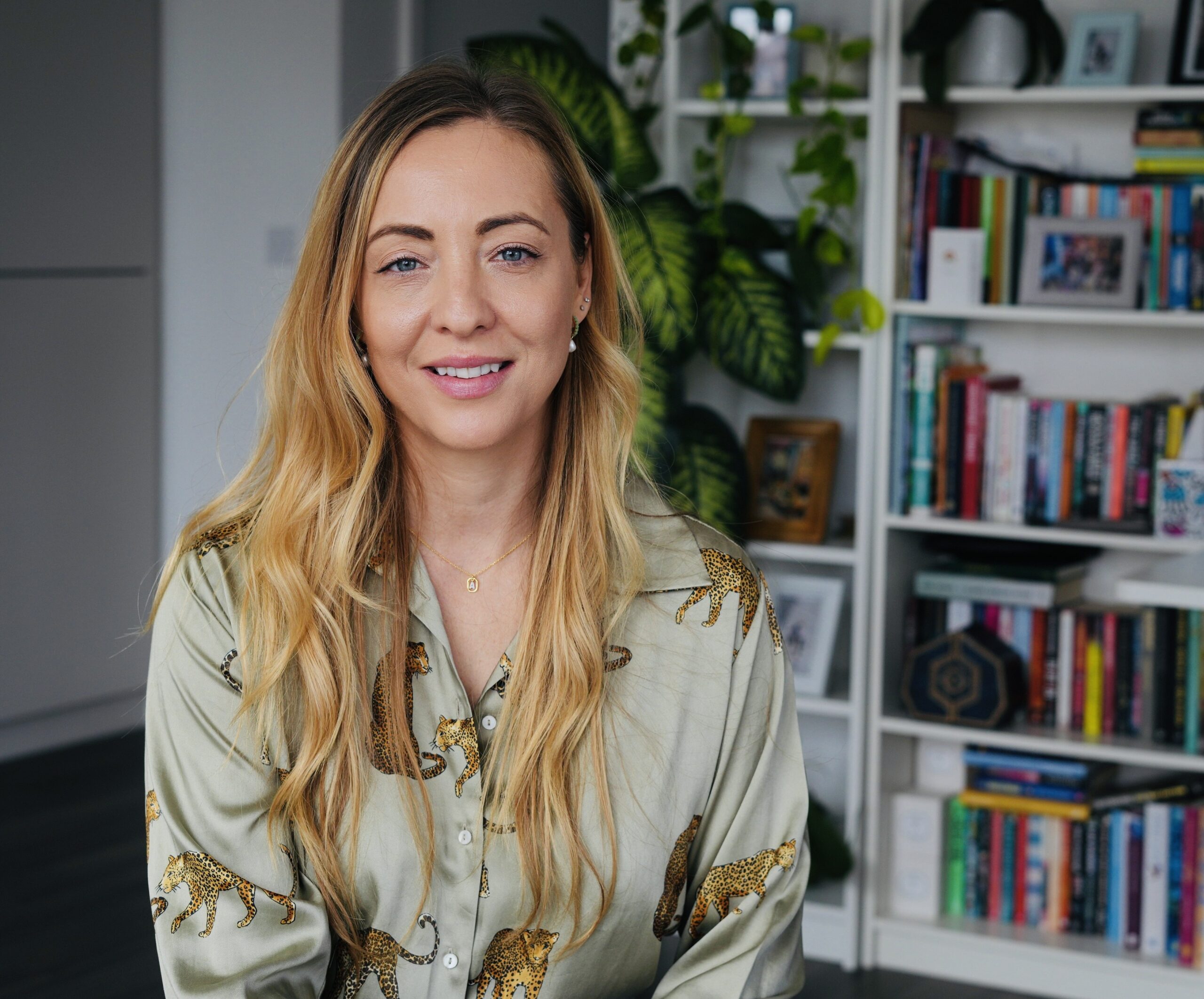
Having spent years as a nanny, Andreea Petre is now realising her dream to have her own business – Intentional Play Spaces. Using the skills and insights she’s gained, Andreea advises parents and carers on how to set up the perfect play environments for their children, whatever the size of their homes.
The way it works is that after an initial phone or online consultation, Andreea will meet with parents to suggest innovative ways to prevent their homes from being cluttered with toys and how to encourage their children to play independently, according to their age and personality.
Creating Play Areas in a Home
“Some parents have playrooms and some don’t,” says Andrea. “What I do is create what I call pockets of play. It could just be a corner of a living room, but the overall idea is that parents don’t have to give so much space to a child’s toys.”
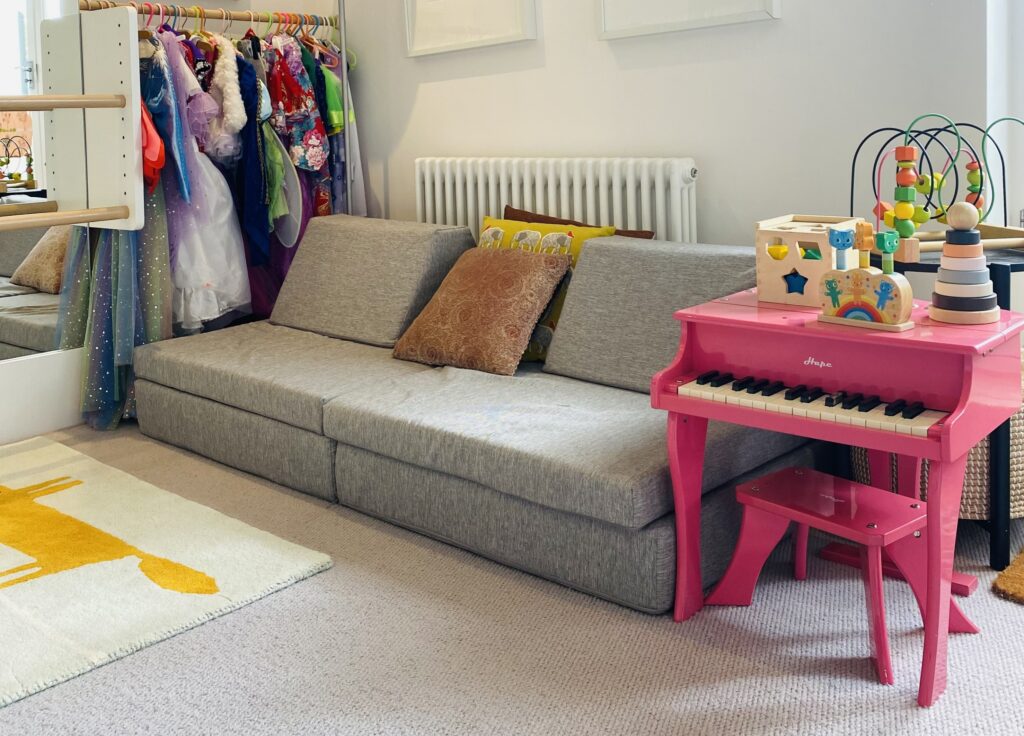
By creating a corner to hang dressing up clothes, children can play dress up without needing so much help from parents.
According to Andreea, giving children a defined area for playing is not going to limit them because “children will be more inspired to play with less toys available to them.”
In this respect, she creates create seasonal play trays. She’ll fill these trays with small objects which can occupy children for a long time and allow Andreea to get on with cooking their supper!
The trays include natural objects such leaves, conkers, pinecones and rice, and small, realistic animals which she says are “brilliant for imaginative play, language development, sorting and storytelling.”
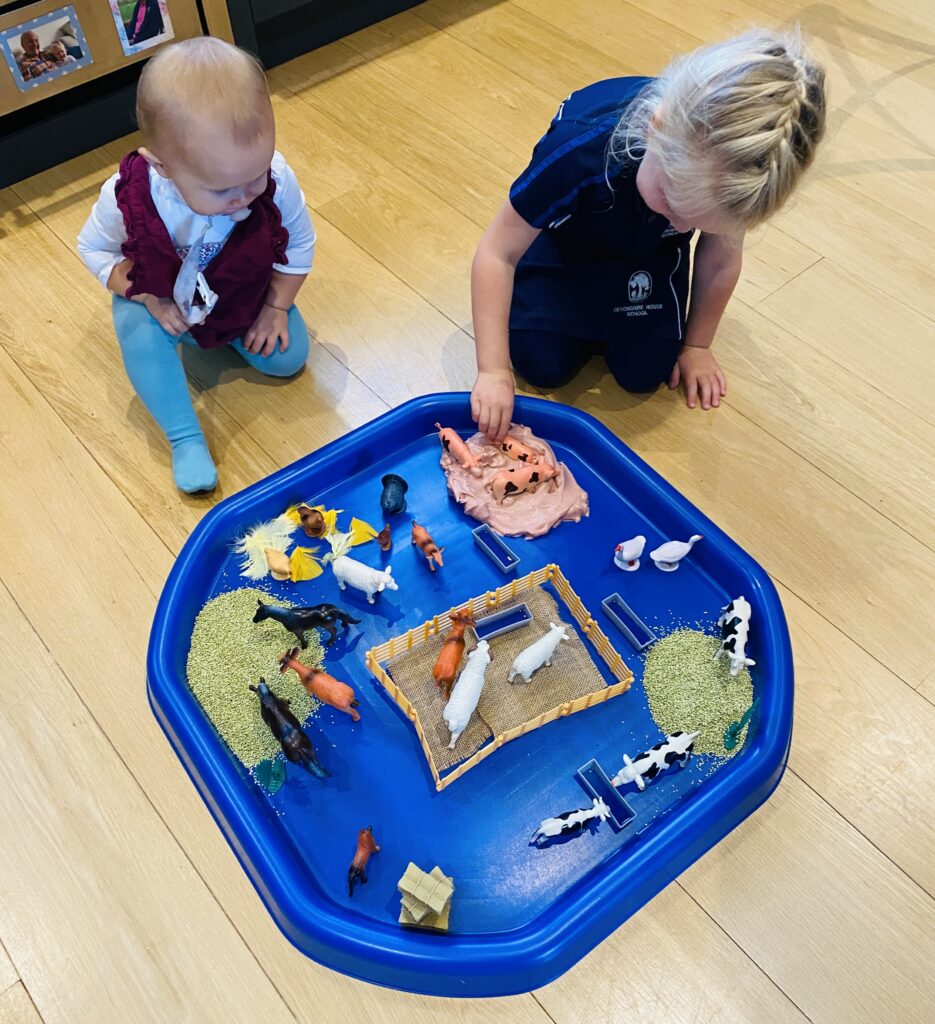
Children of different ages come together with a fun play tray.
Toy Rotation
In the twelve years that Andreea has been living in North London, she’s been a nanny for more than a dozen young children.
“One thing that I constantly hear from parents,” says Andreea, “is how their children have so many toys but don’t want to play with them.” To solve this problem Andreea uses toy rotation.
She says that babies up to 1 year old only need about 6-8 objects to choose from. 5-10 years old can have a space filled with more toys – maybe up to 20 toys – but Andreea’s motto is that less toys can mean more meaningful play.
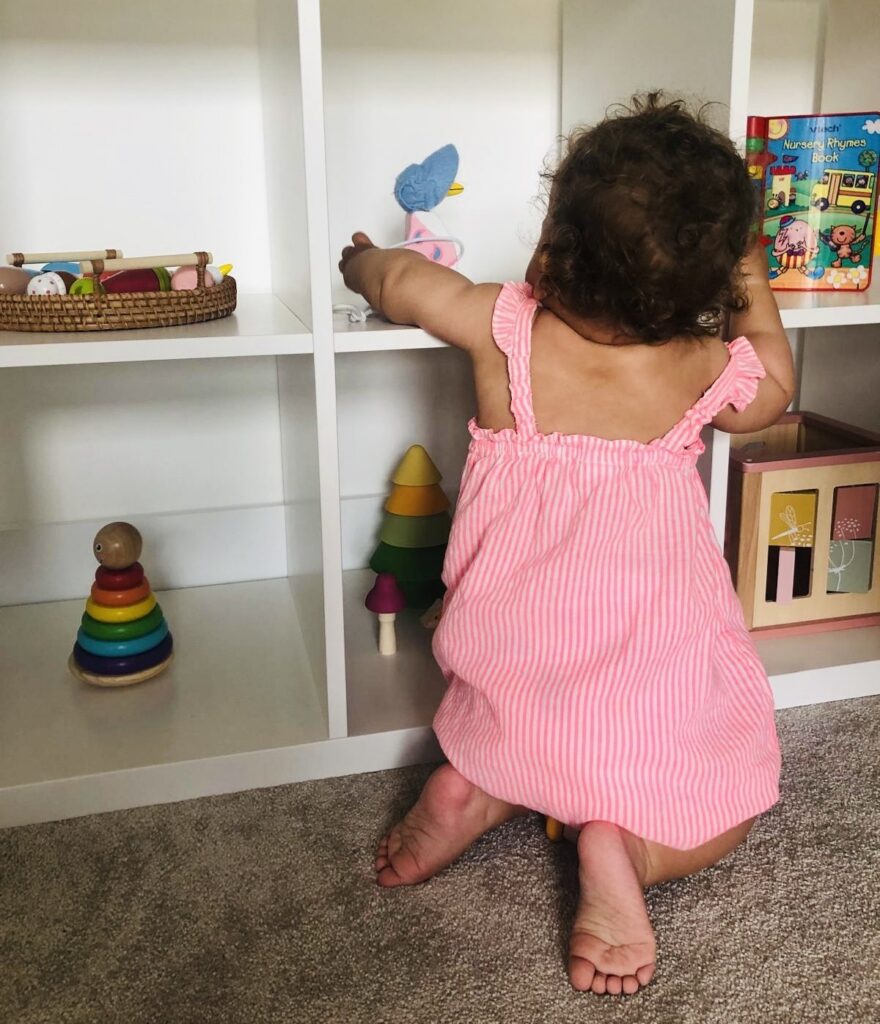
The four- and six-year-old siblings currently in her care know that Andreea rotate their toys every few weeks. “Children don’t need to see everything they own at once,” she explains. “When a toy disappears for a while, they often don’t miss it. And when it comes back, it can feel completely new again. I also pay attention to what they’re actually choosing to play with and rotate around their interests.”
“Children learn through repetition, so playing with the same toy or activity again and again is really valuable. It gives them the opportunity to practise, explore and find new ways to use it.”
When it comes to choosing which toys a child should have, she recommends parents asking themselves what skill each toy supports. Is it sensory or developing motor skills; concentration or imagination?
Encouraging Independent Play
Andreea’s approach is rooted in her Montessori training where children are taught how to do things for themselves. But she also had an eureka moment in 2020.
“During lockdowns I was looking after a five year old from early morning until evening whilst her parents were working. She had some online schooling but otherwise she wanted me to entertain her all the time. It was then that I realised how much I needed her to be comfortable with playing on her own so that I could at least have one hour to myself in the middle of the day.”
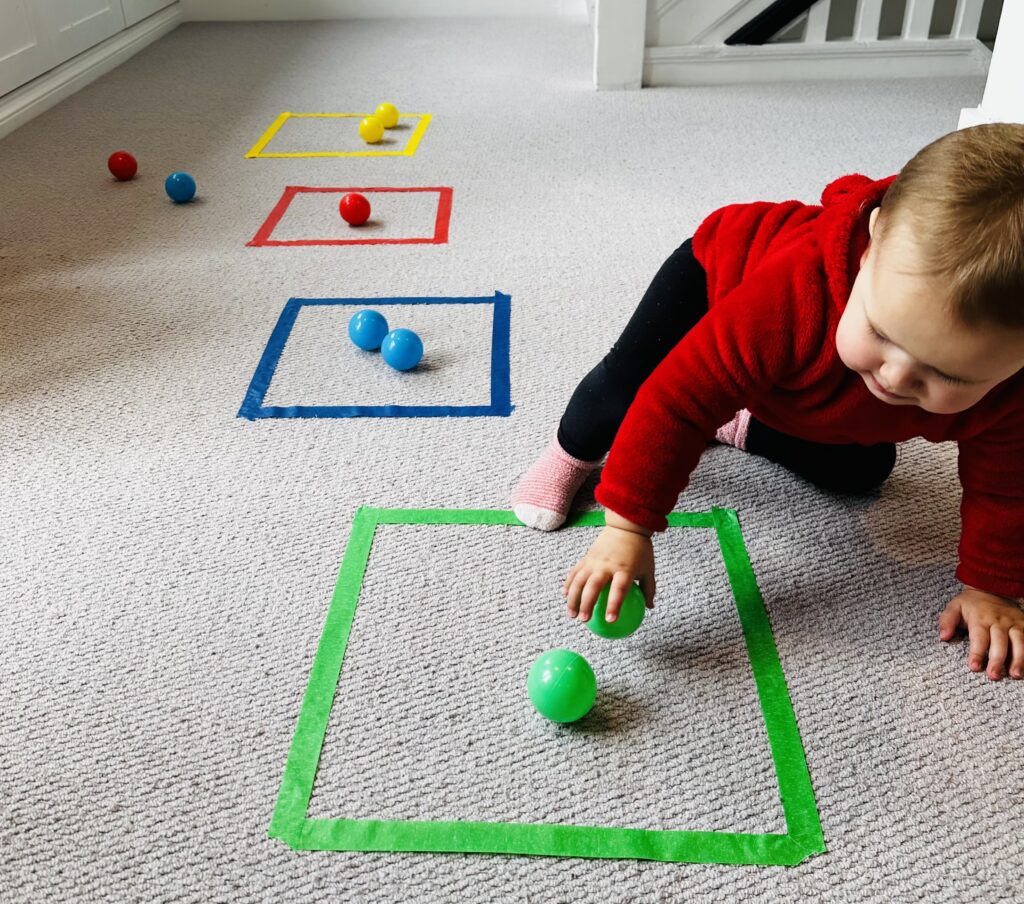
With temporary rectangles taped on the carpet, Andreea finds babies stay happily engaged whilst moving around.
Rest Time to Reset
After lunch, between 1-3pm in school holidays or at half terms, Andreea insists that small children up to the age of about ten years have alone time in their bedrooms. They can be on their beds looking at books, enjoying a screen-free alternative toy like YOTO Mini or colouring. And the result? “With this quiet time, this chance to disconnect and reset, I find that the children play nicer in the hours before supper.”
Sometimes, as to be expected, a child is reluctant to rest. Andreea finds that preparing them for the transition can make a big difference. Giving children a heads up – “in ten minutes time…” – usually helps. “And it’s much easier to achieve this rest period if following the years of after-lunch sleeping as babies, they know no different.”
Andreea’s Favourite Toys
Andreea is a fan of open-ended toys. Foremost she likes a good set of simple blocks, preferably wooden. She says, “They support building, balance, spatial awareness, problem-solving and imagination. And as the child grows you can start to introduce new words such as cube or cylinder.”
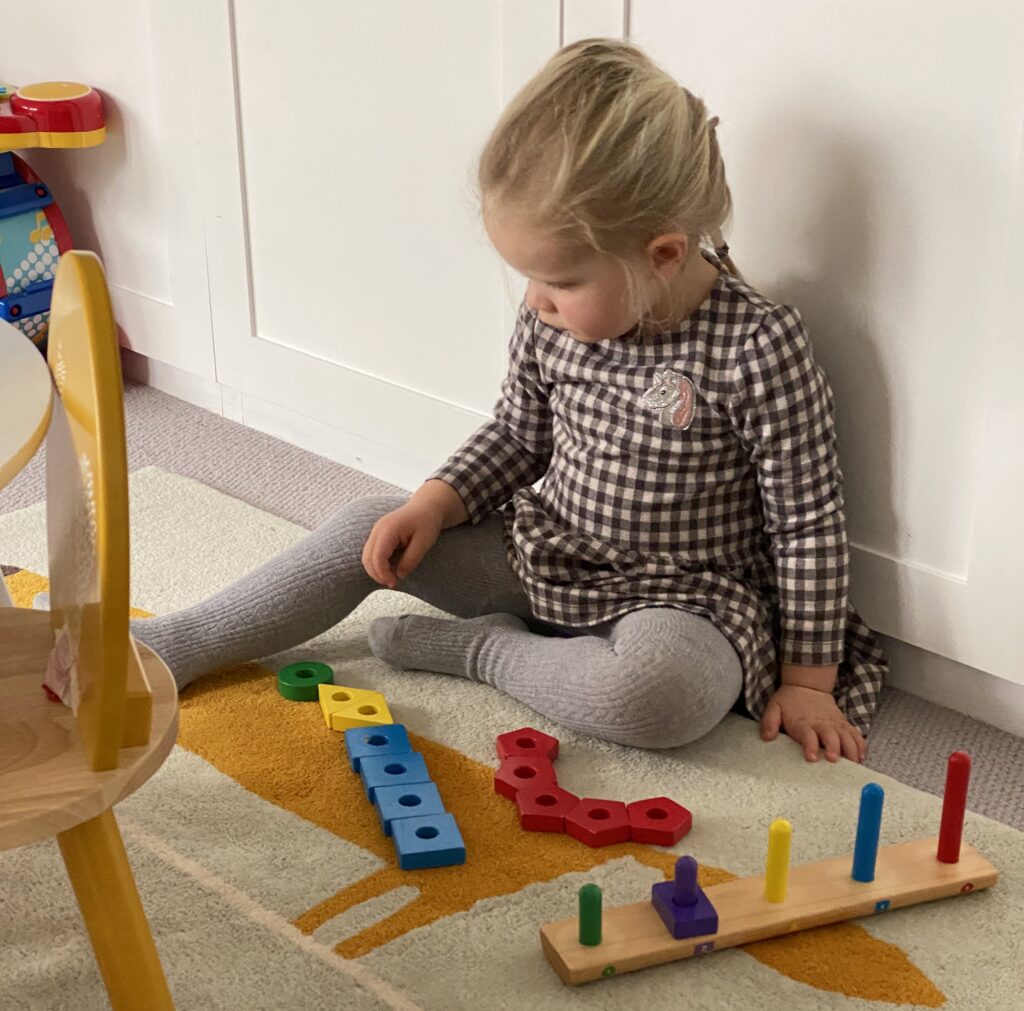
Connetix Magnetic Tiles also offer the benefit of blocks and Andreea describes LEGO DUPLO as a “brilliant grow with your child toy” because older preschoolers can use the pieces for increasingly elaborate imaginative play. She likes Grimm’s Rainbow because it’s a toy that can become anything and the child decides what it is.
For children aged 3 upwards, Andreea says there’s no point to keep puzzles and games where pieces are missing. And once a puzzle is finished, it should be undone and put back in the box. That way a child can enjoy it again and again. She prefers puzzles where the child doesn’t need an adult to show them how to do it.
An accessible art station is not a toy but, Andreea adds, “that’s exactly why I like it.” A basket or trolley with paper, crayons, washable paint, playdough etc. give children the opportunity to choose, create and return to their work independently.
As for all the small bits and pieces which children inevitably collect, Andreea keeps them in what she calls a random box. To get the kids to put their toys back in this box, she gives them a ten-minute warning about when it’s time to start tidying up together.
For pretend-play Andreea says real-life objects often provide more possibilities than highly detailed plastic sets. She recommends things like wooden rings, scarves, fabric, corks, cardboard tubes, small baskets and other safe and open-ended materials. “The beauty is that the child, not the toy, supplies the idea.”
In The Square is grateful to Andreea Petre for sharing her insights and such lovely photos.
Originally from Romania, Andreea is a popular North London nanny who lives in Queens Park.