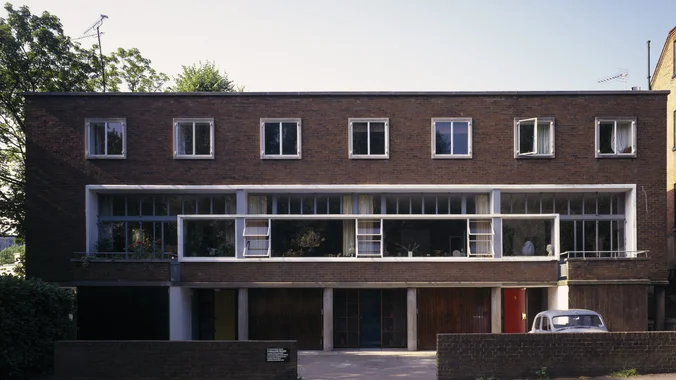
For Belsize resident Marsha Ribeiro it’s been a busy three years, curating the work of her father Lancelot Ribeiro who died 16 years ago. In the year before the Indian-born Expressionist painter died, Marsha told him that she wanted to work in the arts. He replied, “That makes me very happy.” Marsha clarified, “I mean with your work, Dad.”
In 2010 Marsha started the long process of sifting through her father’s Belsize Park studio packed with artwork and materials. In 2013, she held the Memorial Retrospective Restless Ribeiro at Asia House in Marylebone. It drew people from across the globe to witness the breadth of Lancelot Ribeiro’s work.
For an artist who had with his first exhibition in the city of his birth (then Bombay, now Mumbai) seemed on the path of a rising career, the memorial was a way for visitors to ‘rediscover’ the work of an artist who was significant not just in England.
The following year saw the first publication of the acclaimed biography Lancelot Ribeiro: An Artist in India and Europe by arts writer David Buckman and four more exhibitions in India and London. Marsha needed to leave her career in agricultural economics to devote herself full-time to curating her father’s art.
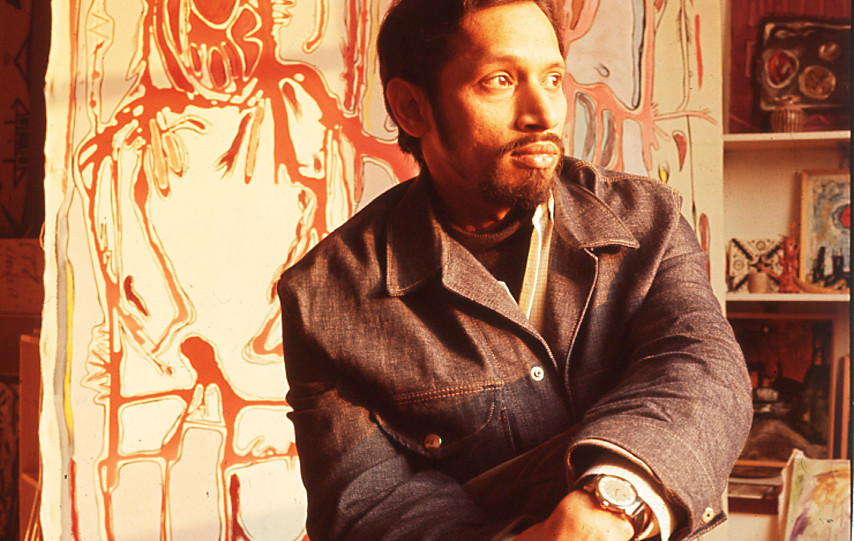
Lancelot Ribeiro in his Belsize Park studio in 1966/67
Keeping Her Father’s Legacy Alive
At a café near her home in Belsize Grove, Marsha tells me that it’s in the last few years that interest in Ribeiro’s art has grown and even more so in 2026. In February, a Symposium at the Victoria and Albert Museum titled after a poem her father wrote – Lancelot Ribeiro: A Risen Voice – spotlighted Ribeiro’s contributions to the canon of British visual arts. The audience was fortunate to be the first to view three paintings – including Landscape at Noon – from a canvas roll dating back to 1964 which Marsha discovered just two weeks before the Symposium!
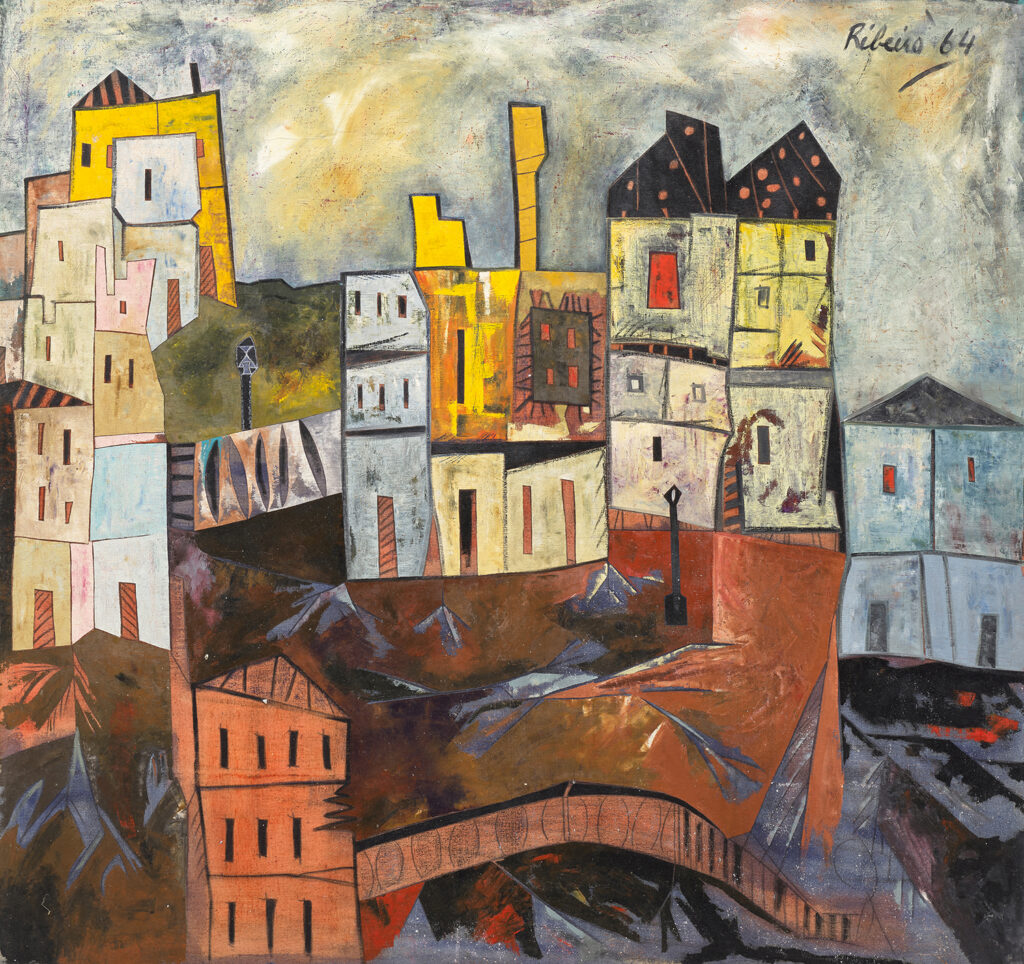
At a Philips Modern and Contemporary Art sale in March 2026, the newly discovered Landscape at Noon from 1964 set a record for a Ribeiro artwork.
Undoubtedly, Marsha’s commitment to her father, whom she remembers as “a wonderful inspiration, encouraging me in every way,” has greatly contributed to more people seeing his work. From local talks, events and workshops often in collaboration with galleries and museums, Marsha has been keen to share how her “incredibly complex dad…remained true to his art.” In August 2026, Camden Borough honoured Ribeiro’s legacy with A Retrospective Revisited exhibition at Swiss Cottage Library, as part of South Asian Heritage Month.
The Early Years of Lancelot Ribeiro’s Life
In 1950, the 16-year-old Lancelot Ribeiro was sent by his Goan mother Lilia from his Mumbai childhood home to train as an accountant in London. Instead, he found a passion for painting. After enrolling on a few part-time courses at St Martins, Lancelot began a life, according to Marsha, shaped by, “painting from imagination and memory…mostly throughout the nights…driven by experimentation.”
To date over 50 worldwide museum and corporate collections now hold Ribeiro’s artworks. In the last three years, there have been nearly 40 exhibitions, mainly in the UK, US and India.
Of course, India has taken a particular interest in immortalising Ribeiro. His first ever exhibition in 1961 at the Bombay Artists Aid Centre launched his career. Soon after arrival back in the UK, Ribeiro became a familiar artist in Hampstead and West End galleries.
In 1963, Ribeiro founded the Indian Painters Collective in the UK and the following year the group held their Six Indian Painters exhibition at India House. His status as one of our leading Indian artists was further established when art dealer Nicholas Treadwell decided to include Ribeiro’s paintings on his infamous fleet of mobile art galleries and Camden featured his work in their innovative Picture Loan Scheme.
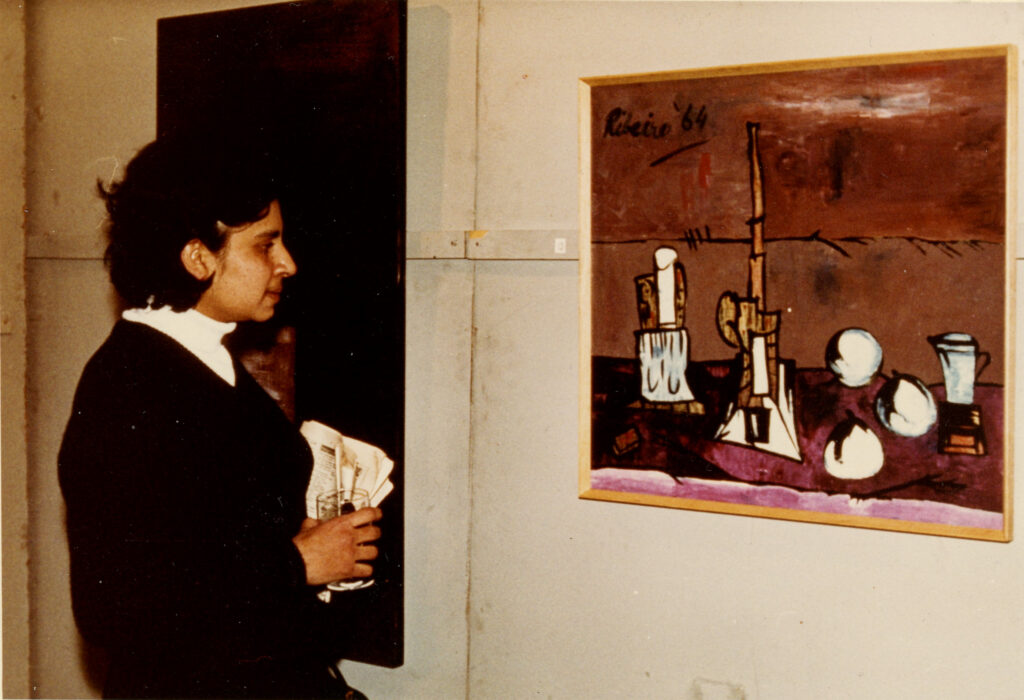
Lancelot’s wife and Marsha’s mother Ana Rita at the Six Indian Painters Exhibition in 1964.
No synopsis of Ribeiro would be complete without mentioning the lengths he went to find the right polyvinyl acetate (PVA) product to make his own paints. The result was, according to Marsha, “… a new medium which had faster drying times and produced a brilliancy of colour.” From The Times, Ribeiro earned the accolade as ‘the godfather of generations of artists using acrylics as an alternative to oils.’
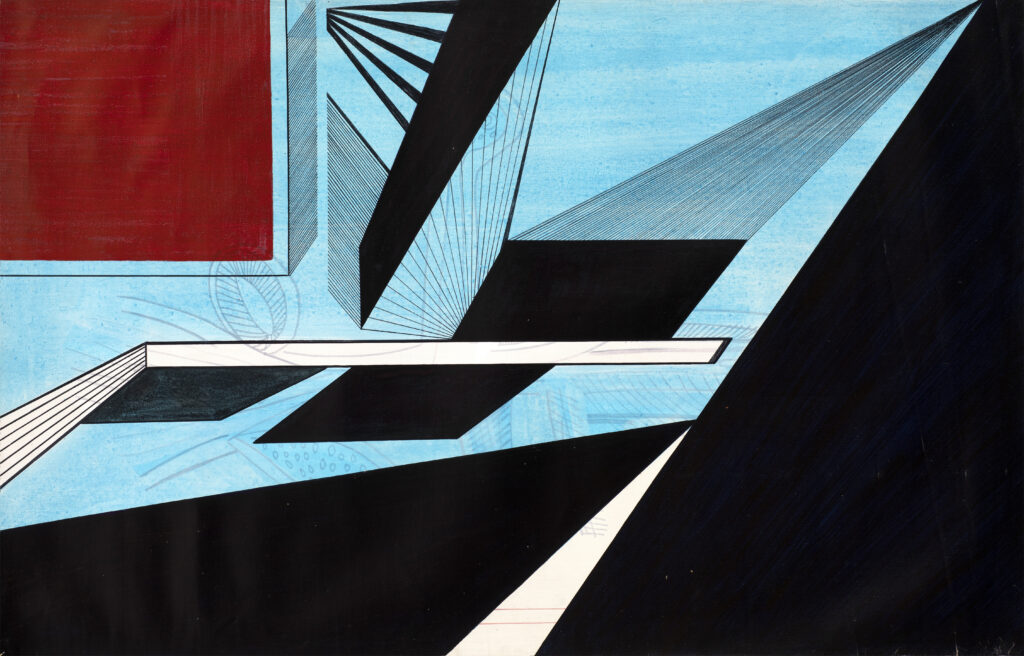
Vanishing Point was painted with PVA in 1969
Ribeiro Withdraws from Public Exhibitions
Although his output did not stop, in the last 20-30 years of his life, Ribeiro withdrew from the public exhibition world in the UK. Marsha believes, “he was somewhat disillusioned with commercial galleries.” She continues, “He largely threw himself into a new chapter of expressionist visions which were embraced in Germany.” Marsha recalls that her father had also hoped to establish himself in America. Posthumously, this wish has been achieved. In December 2026 there’ll be an exhibition at the AINA Gallery in New York.
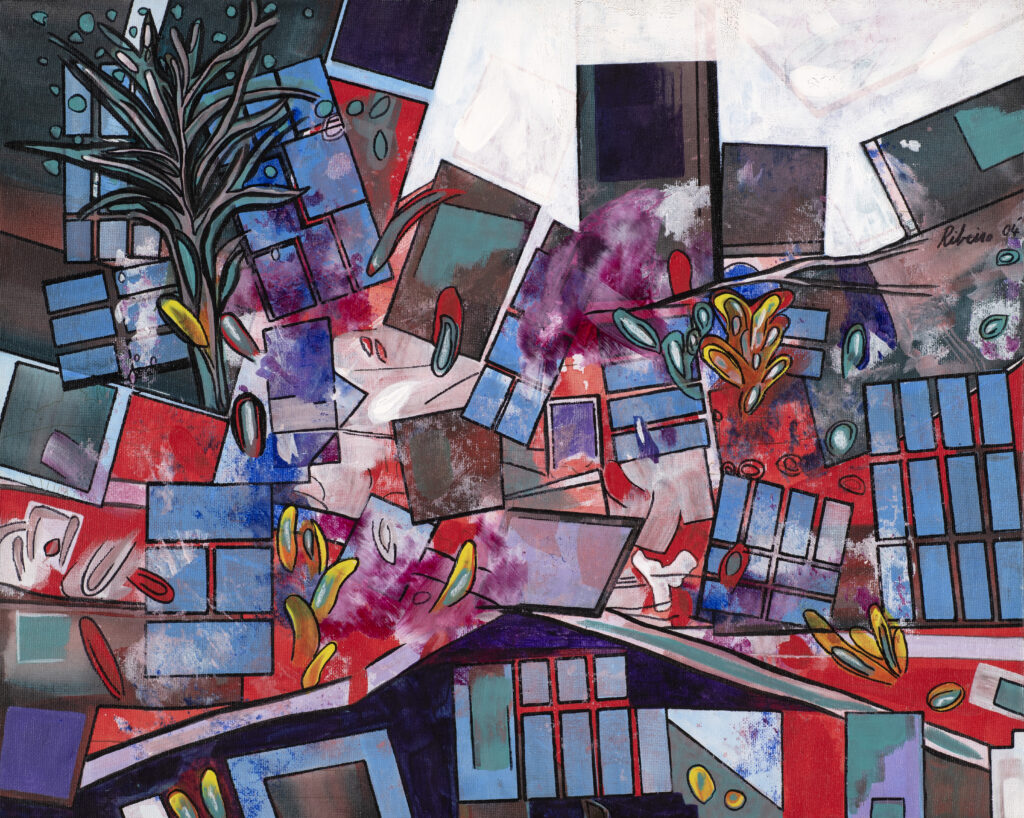
Ribeiro’s Blue Redscape, 2004.
Nowadays, there are eight Ribeiro artworks in Leicester’s New Walk Museum and Art Gallery which is known for its Expressionist Art Collection. And in London, Ribeiro’s work sits in the British Museum, at the V & A and the Tate, as well as Burgh House in Hampstead and the Ben Uri Gallery in St Johns Wood. There are two watercolours on display in Camden’s Art Collection.
Ribeiro’s Life In Belsize Park
Of all places, it’s Belsize Park which will always be closely associated with Ribeiro. In 1964, Lancelot and his wife Ana Rita took a first floor flat in the area. They didn’t have much money, and in the 2026 edition of Lancelot Ribeiro: An Artist in India and Europe, Ana Rita recalls how “Lance would often give a painting for something as payment…That’s how we got our curtains in the house of 41 Belsize Park Gardens.” Marsha was born in that flat and grew up with her childhood “spent playing in her father’s studio or on the streets of Belsize.”
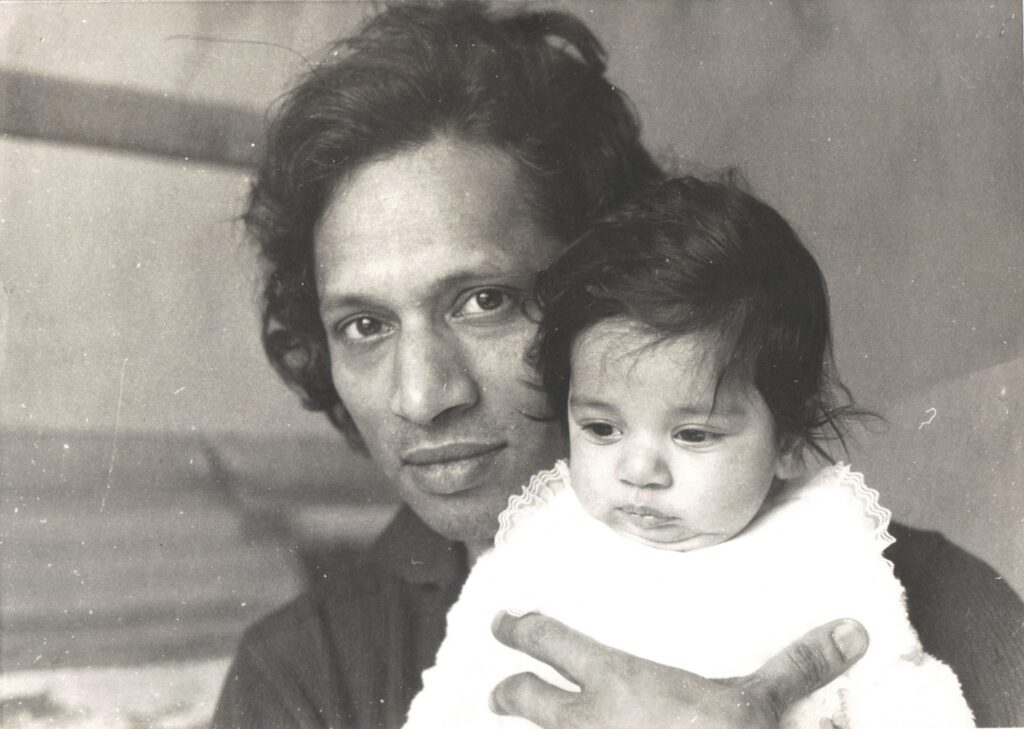
Lancelot and baby Marsha in 1970.
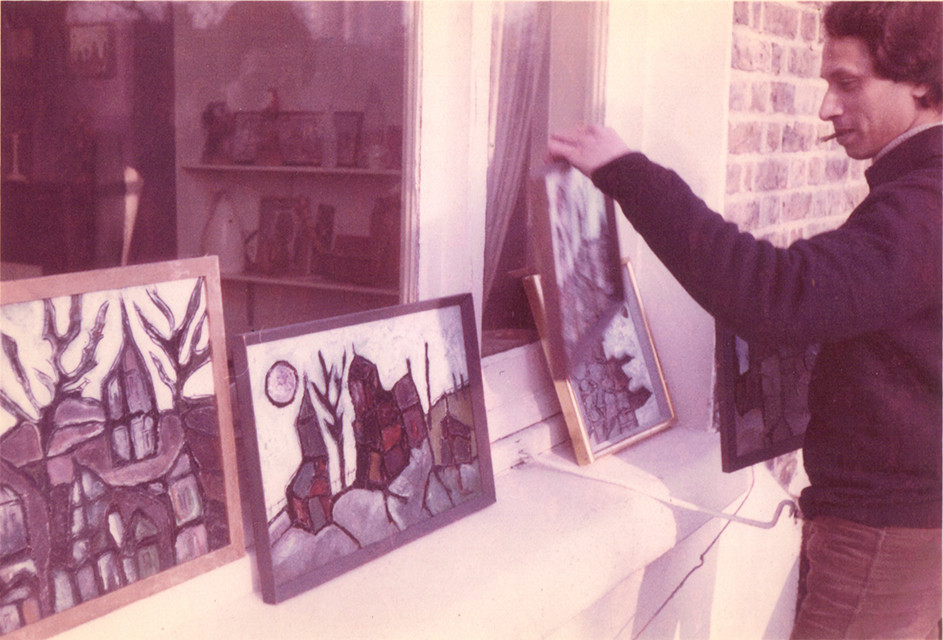
Ribeiro photographing his work on his Belsize Park Gardens balcony in 1968.
When Marsha’s parents separated, Ribeiro left Belsize, but in 1980 he returned and took a one-bedroom attic flat at 214c Haverstock Hill. It was his home until he died on Christmas Day in 2010, aged 77. In Buckman’s book, there are several descriptions from friends who visited Ribeiro in his cluttered Belsize flat, filled with his paintings and writings.
Marsha remembers how the smaller-sized Haverstock Hill flat meant that her dad “could only really work – at least initially – on a small scale. This led to a series of watercolours, inspired by the English country landscape.”
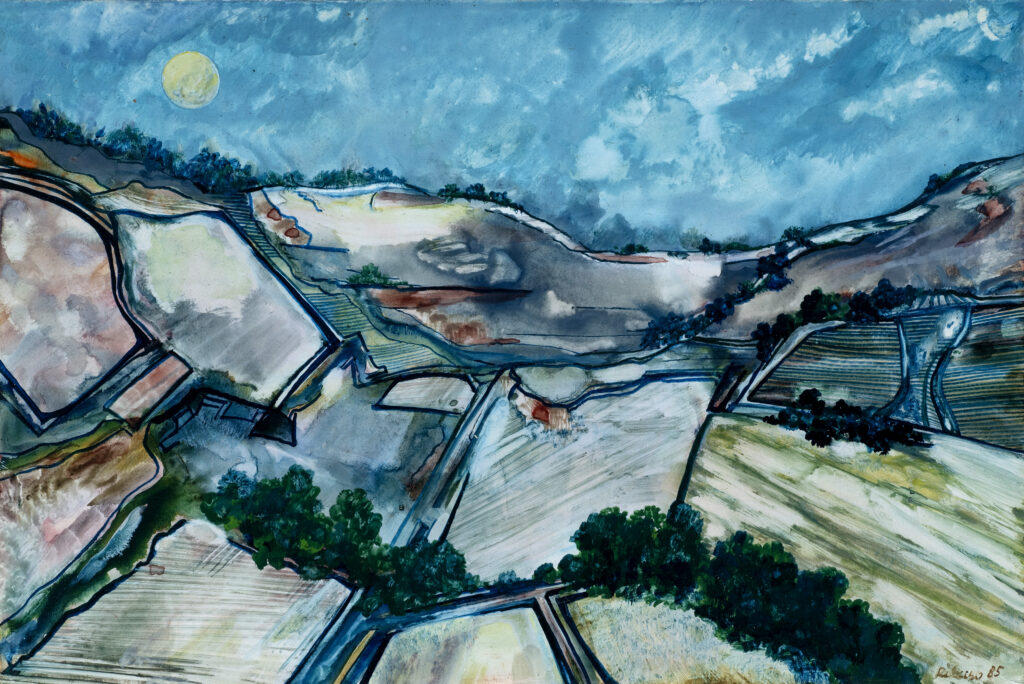
Untitled Landscape, 1985. Ribeiro confided to a friend that watercolour painting gave him “a lot of joy, was extremely relaxing and perhaps levitational.”
Asking Marsha to share best moments with her dad, she remembers, in later years, their time spent together on his beloved Hampstead Heath. In summertime she and her talkative father would have picnics together. And in the winter, the two of them would take long walks on the Heath before returning to a roast slowly cooking in the oven at 214c Haverstock Hill.
With thanks to Marsha Ribeiro for providing all these wonderful photos of Lancelot Ribeiro’s artwork.
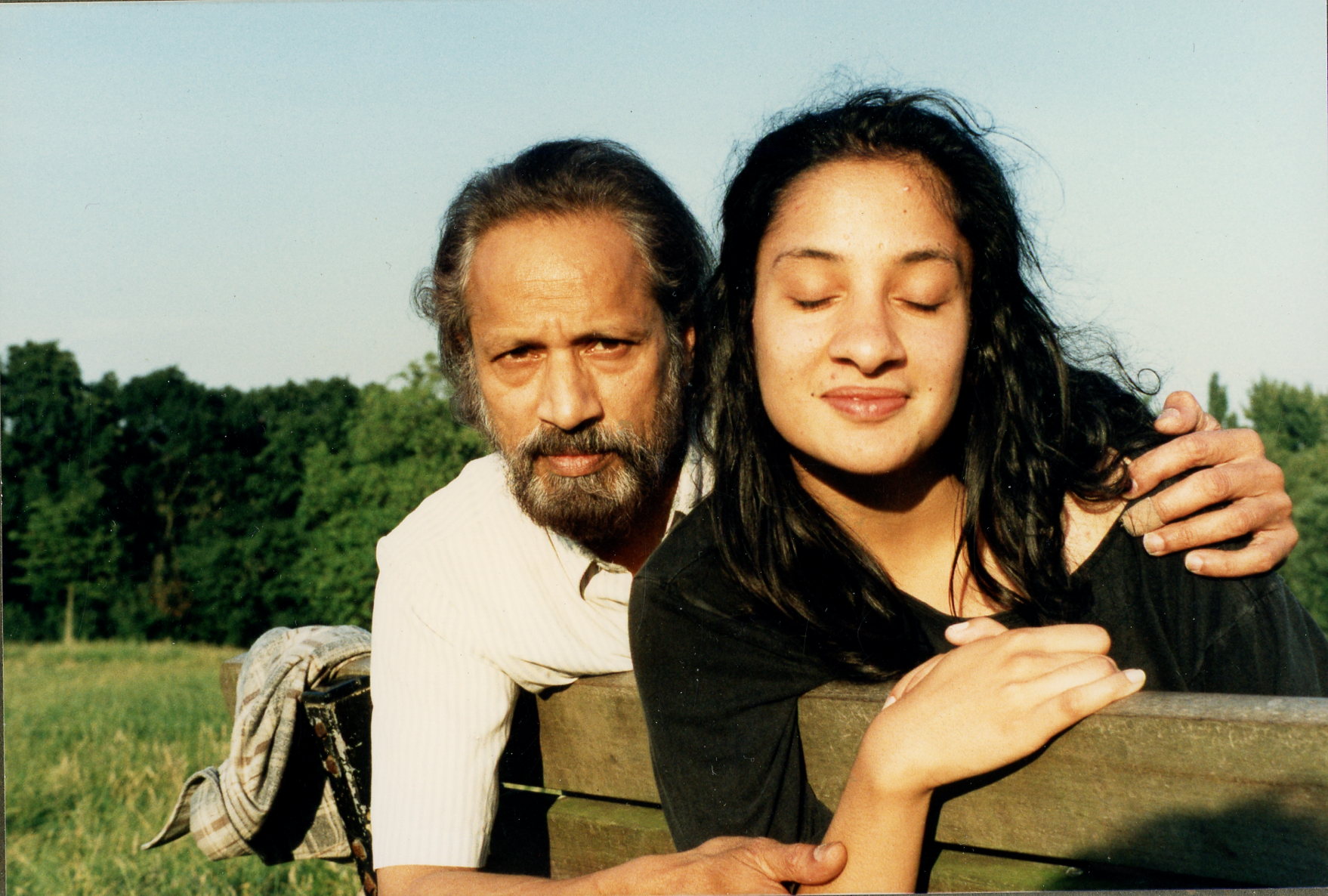
Cover Photo: Lancelot Ribeiro and his daughter Marsha Ribeiro on Hampstead Heath in 1989.