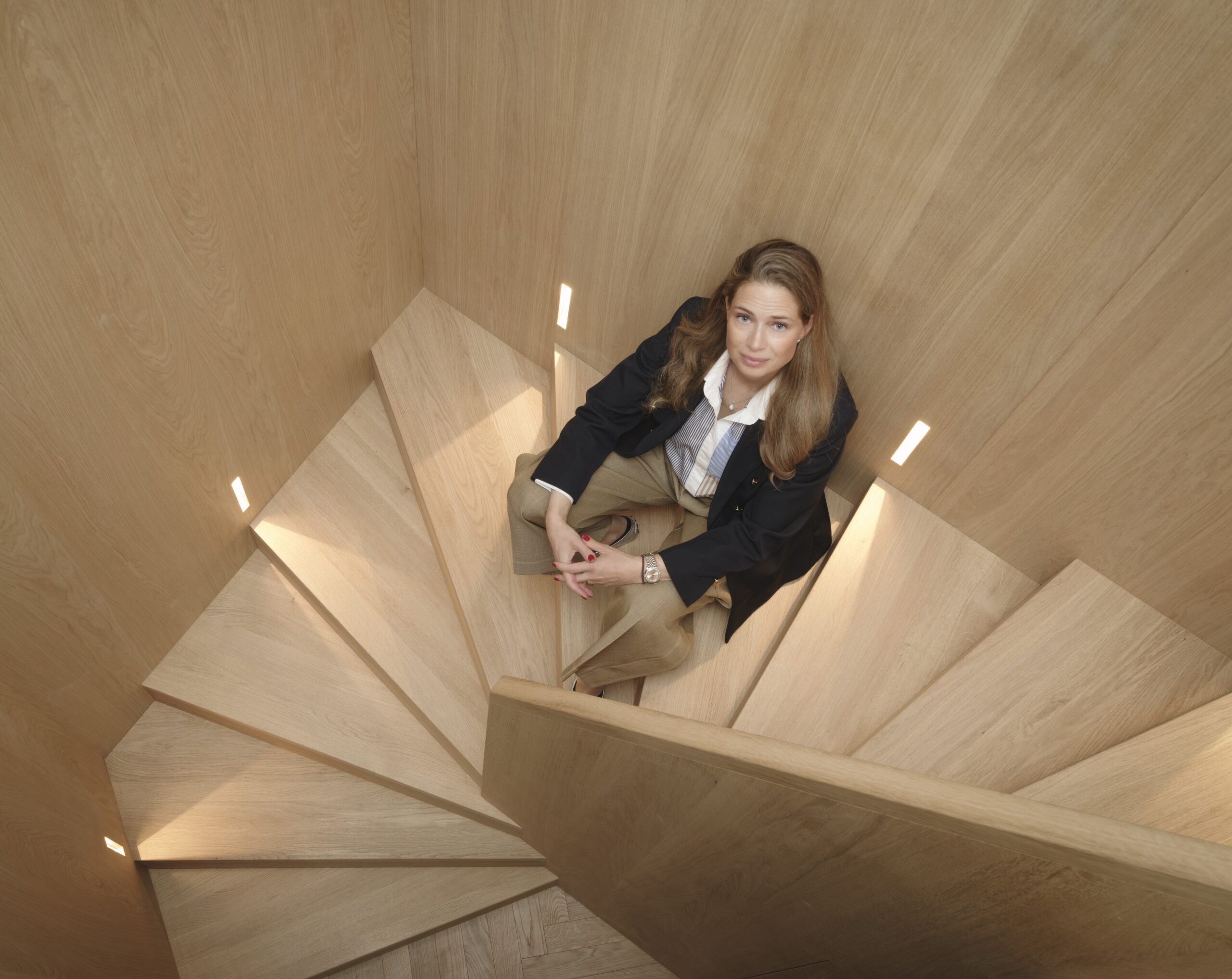
Meeting Claudia Dorsch at her Hampstead home let me see how this modest career champ brings together her German heritage, English life and love of French culture and art, to create beautiful interior designs.
Growing up in Frankfurt, Claudia’s dad would regularly take her to antique and flea markets. Many of her school friends lived in houses which reflected 80s interior trends, but Claudia’s family home was more nineteenth century with antique and vintage furniture, lots of Persian rugs and walls filled with paintings.
“As a child I thought my parents’ taste was weird. But now I see that I had a good training!” says the trilingual international designer, as we sat in her Library – a front room with floor to ceiling shelves stacked with sample books, and a central island where Claudia and her team get hands-on creative.
Claudia’s reverence for antiques which “are always well-made and give value to any interior,” speaks of her love for age-old woods with character and English craftsmanship. She still spends time sourcing furniture from markets and auctions, and her own main lounge could be the setting for a modern period drama.
But the traditional Claudia is only one aspect. Knowing that a house needs, above all else, to work for the people living in it, Claudia designs with the ethos that “furniture needs to serve a purpose. Each piece must justify its place.”
Her home with its palatial chandeliers and ornamental ceilings also has a gym which all the family use; and as a mother of three, when it comes to designing kitchens, she understands how they should serve “not the idealised version of life but the real one…”
Early in our conversation, she talks about “the needs of a hallway,” and shows me a photo from a city home where the hallway includes a pull-out cabinet which can hold three scooters and helmets.
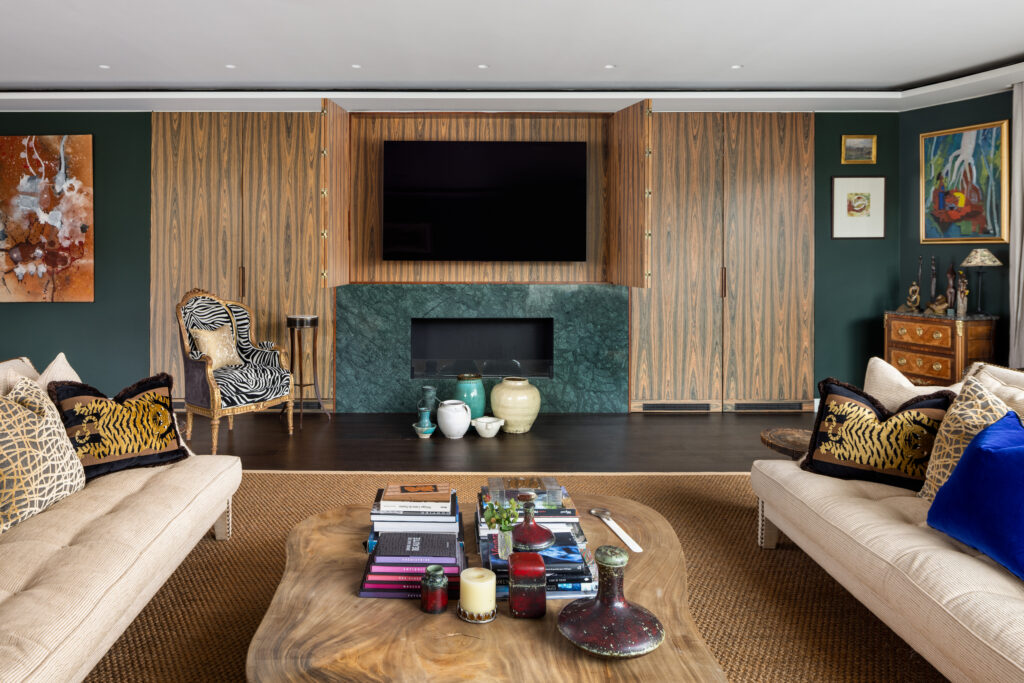
“The strongest homes mix periods and disciplines without apology: a contemporary photograph beside an old oil, a travel find beside something formally acquired. Get that right and a home won’t look decorated but will read as someone’s life…” Claudia Dorsch
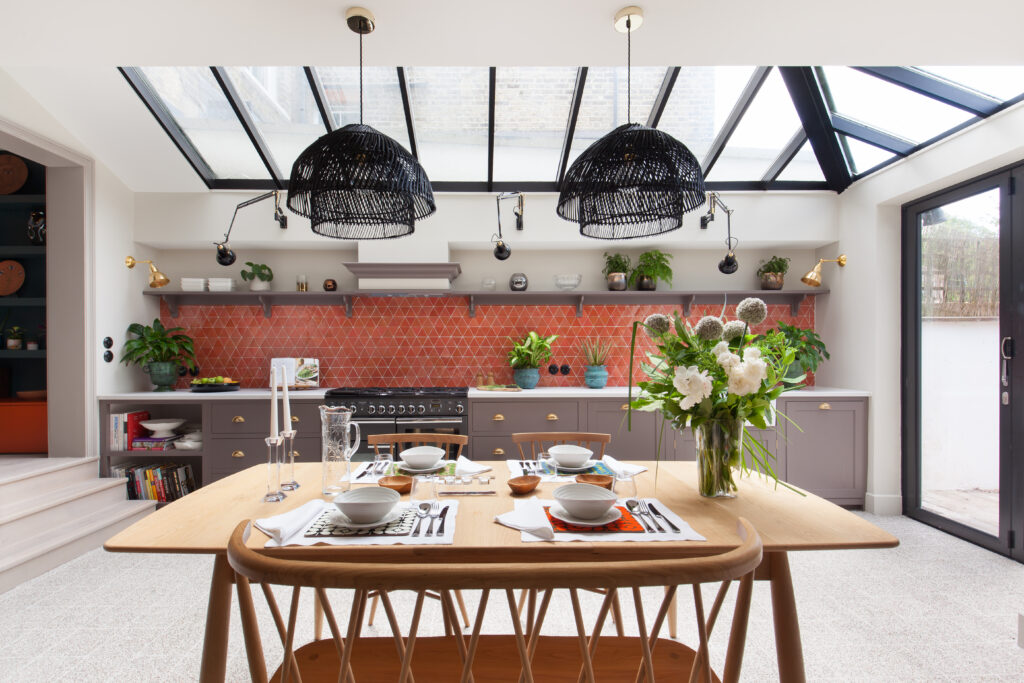
In an initial non-committal two-hour consultation, Claudia will share her overall vision for a property. With renovations, Claudia often finds that her clients are looking to bring coherence to their homes – what’s known in interior-speak as ‘flow’ – and to have less clutter. Claudia often relies on bespoke furniture for storage solutions, but she also likes to see where she can work with clients’ existing furniture and accessories to transform.
Whilst at university studying business (afterwards she briefly worked in finance) Claudia was already gutting her first marital home and loving the art of renovation. In 2009 she established Claudia Dorsch Interiors which focuses on three types of homes, categorised by her as City, Ski and Surf.
With a family summer home on the French coast and a chalet in Switzerland, Claudia has a lived understanding of “how a family lives in a specific place.” She believes, “I’ve sharpened my senses and intuition over enough time spent in London and by the sea and in the mountains to learn to trust them!”
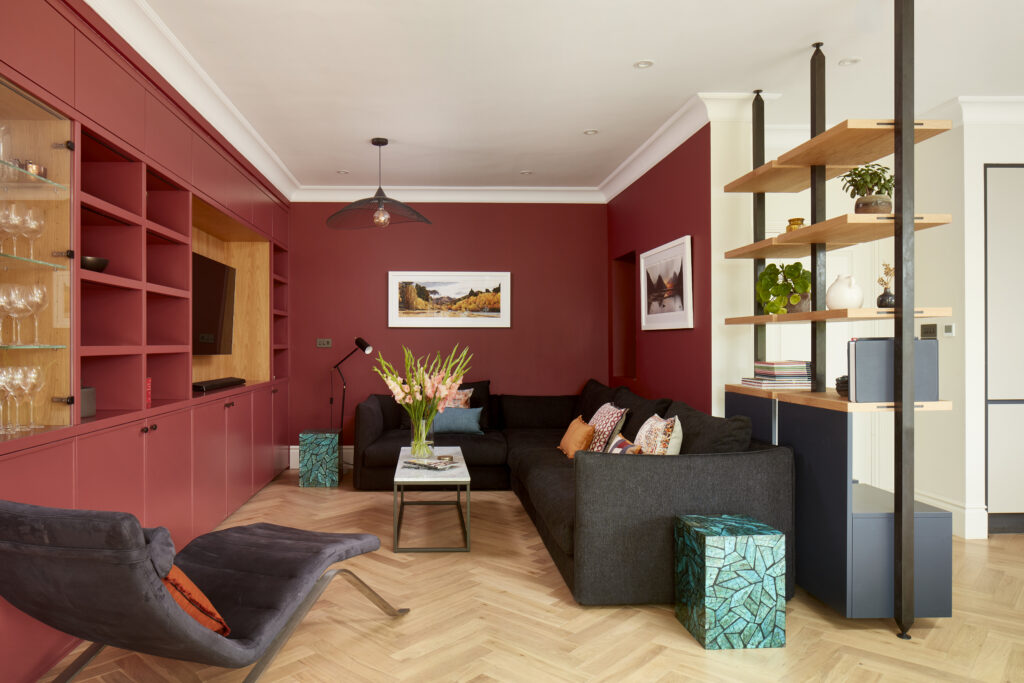
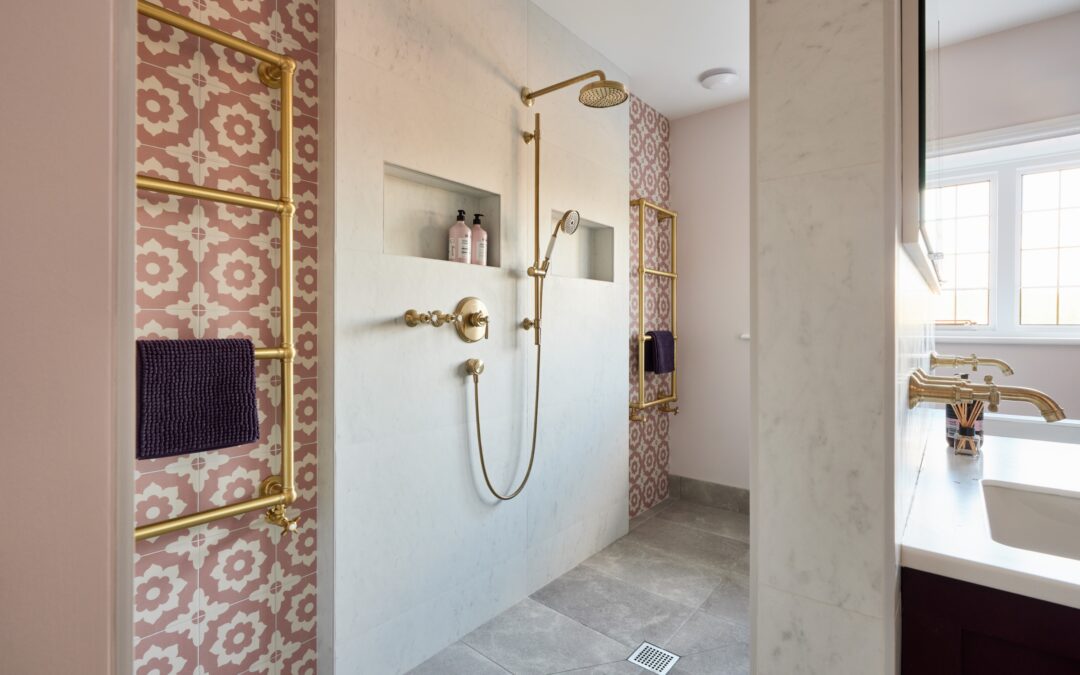
“The city home carries the full weight of daily life. It must be ordered enough to function and layered enough to feel alive.” Claudia Dorsch
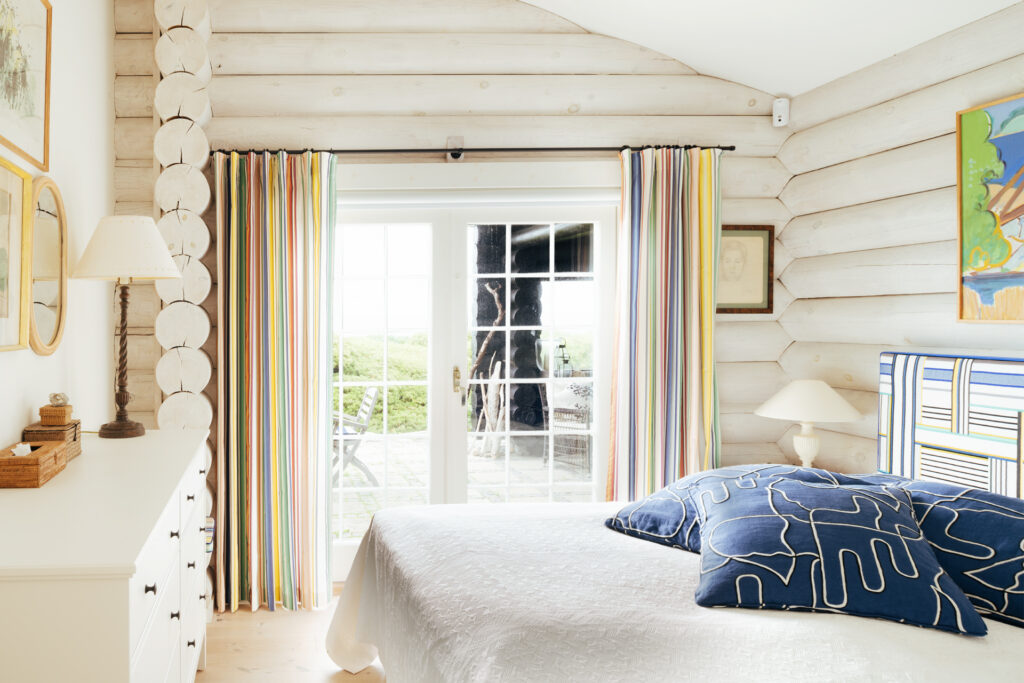
“Costal homes are shaped by light, and light on the coast in never generic. Salt, air, sand and water shape every material choice and spatial decision.”
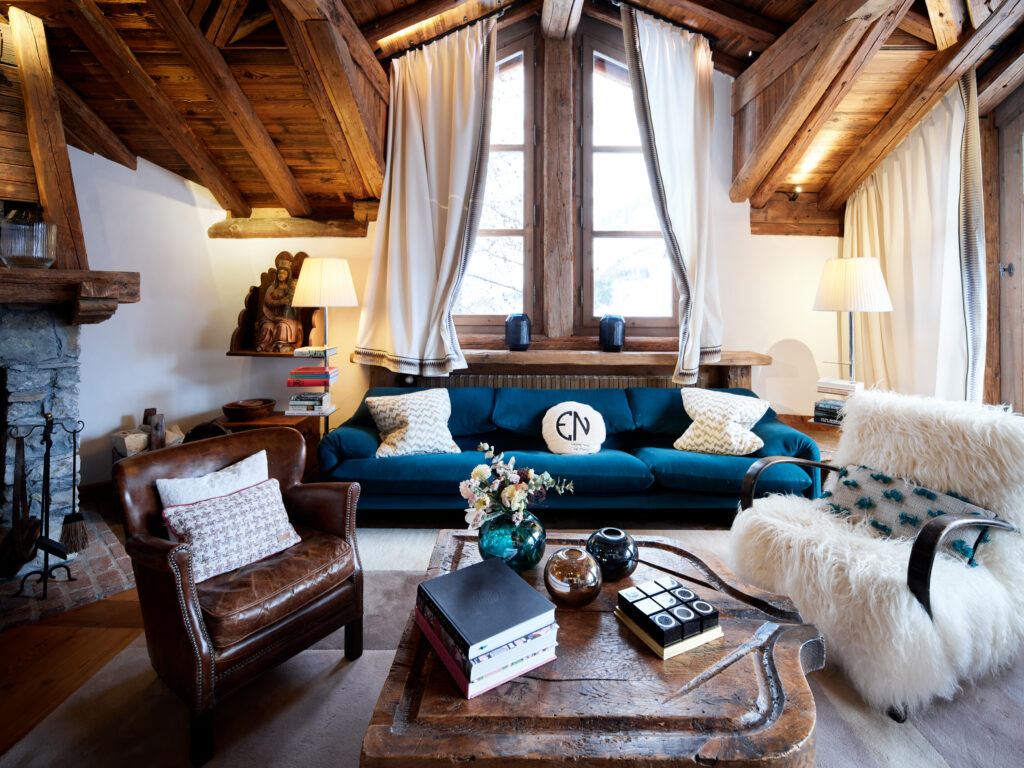
“Mountain homes call for materials which hold warmth, age honestly and sit well in a landscape that shifts with every season. A chalet must be built for the whole year.” This interior is from a chalet in Val D’Isere which earned Claudia an International Architecture & Design Award 2025.
Most of our time together we talked about chalets because Claudia is designing this year’s VIP Lounge at Decorex, a leading luxury design event taking place at Olympia London from 11-14 October 2026. Her concept is titled Back to the Future – The Chalet Reimagined.
At Decorex, visitors have the opportunity to meet new makers, established brands and suppliers across furniture, lighting, surfaces, fabrics, accessories etc. Claudia intends the VIP Lounge to be “a space where visitors can linger, slow down, exhale and feel pulled toward the circular fireplace.”
Blending traditional alpine materials with the best of 70s design, the VIP Lounge includes a very glamourous entrance, a bar, mountain terrace and DJ Zone for retreat and play.
“In a chalet, colour isn’t the only tool that makes a room feel warm. Rough plaster against smoothed oak, boucle against stone, the imperfect edge of a hand-finished surface. These are what a hand notices,” says Claudia who is also experienced in interior architectural design.
“The real luxury of a chalet, which may be owned by a family for decades, is not in its scale or spectacle…but in being a home that gets better at being lived in.”
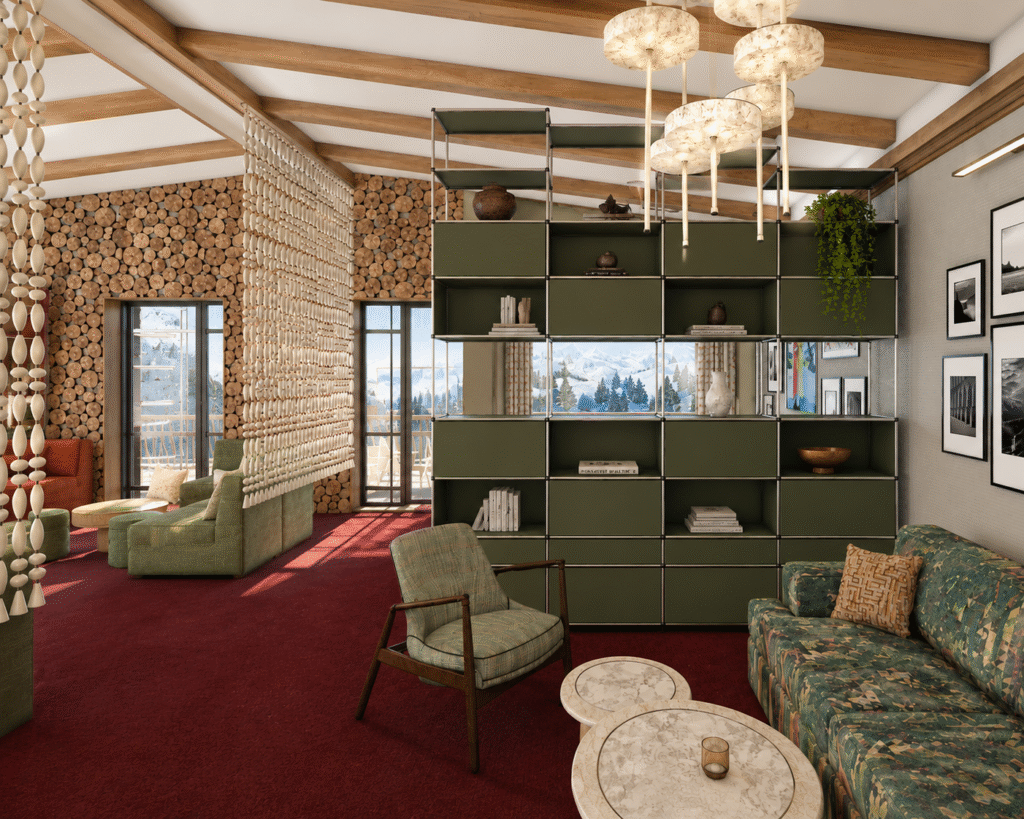
A sneak preview of part of the Decorex VIP Lounge designed by Claudia Dorsch Interiors.
www.claudiainteriors.co.uk
www.decorex.com
Tickets to the Decorex VIP Lounge include access to networking events, recordings from the Design Talks programme in which industry leaders and expert panels discuss trend insights and opportunities, premium refreshments, and a chance to enter a prize draw for a 2-night stay in Zermatt during the April music festival.
Photos courtesy of Claudia Dorsch Interiors